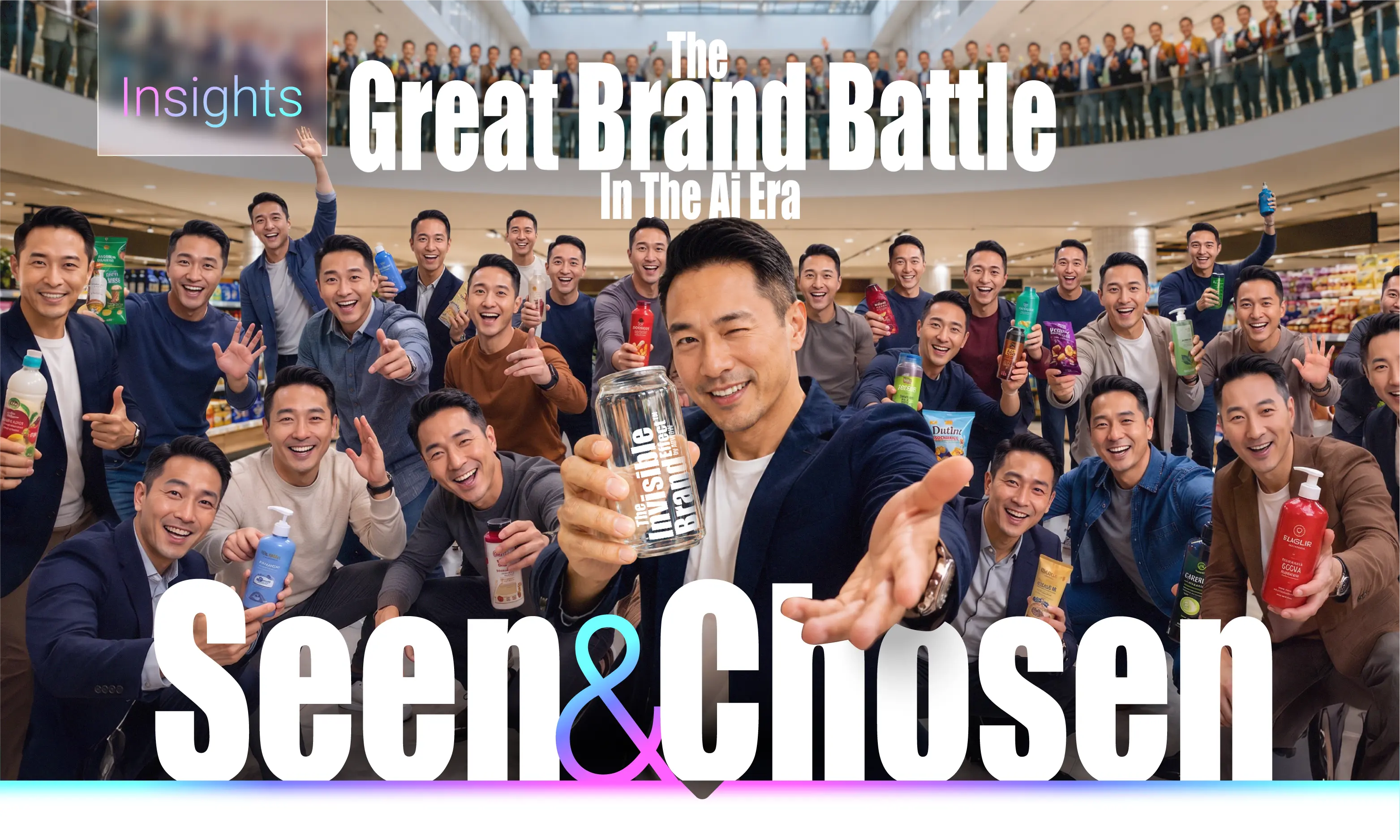
There is a particular kind of problem that is hardest to catch — the kind that does not show up in the numbers until it has already done its damage.
Right now, across category after category, brands are hitting their content targets. Campaigns are shipping on time. Output has never been higher. The operational story is one of efficiency, velocity, and scale.
But sit with consumers long enough — in the way that good brand work eventually requires — and a different story begins to surface. Recognition without feeling. Familiarity without preference. The sense that one brand could be swapped for another without much being lost.
The content is arriving. The connection is not.

For most of the industry's history, producing genuinely good brand work was difficult. That difficulty was not a flaw — it was a filter. It ensured that the brands willing to invest in harder strategic and creative work earned a natural distance from those that were not.
That filter has been removed. Almost overnight.

This distinction matters more than it might first appear.
The convergence happening across the AI era is not visual. Surface variety has never been greater — more styles, more aesthetics, more formats than any previous era produced. The convergence is happening at the level of strategic thinking. And it is subtle enough that most brands will not feel it until the cumulative effect is already significant.
The old mental model of competition was relatively readable. You knew your category. You knew your main rivals. The frame was stable enough to plan within.
That frame has dissolved.


What the brands that fade quietly got wrong — and how drift begins before anyone notices.
Every piece of content calibrated to perform in the moment. Metrics climbing. Engagement ticking. The cumulative effect, felt only later: a brand always present, never remembered. Performance and meaning are not the same measure — and optimizing hard for one while neglecting the other is one of the quietest ways a brand begins to disappear.
The work of knowing what a brand stands for — specifically, in a way that cannot be borrowed — was assumed rather than actively maintained. Positioning was documented, presented, filed, and left to govern itself. In a stable market, that assumption holds for a while. In a fast-moving one, it quietly expires.
When a brand's moves can be predicted from what the market is doing, it has already ceded the strategic ground that makes it worth paying attention to. Reactive brands produce content that arrives on time and says nothing new. They join every conversation. They lead none.
Not because the tools failed — but because strong output without strong human direction produces work that satisfies metrics and accumulates into no particular meaning. The question is never what AI generated. It is what the human behind it actually knew.
A brand strategy not actively tended — revisited, stress-tested, refined as the market shifts — is not a living strategy. It is a document. The distance between those two things is where brand equity quietly leaks away.

What the brands built to endure chose to do differently — and why these choices compound over time.
In a saturated market, the instinct is to speak louder. The brands built to last go quieter — and more precise. Sharper choices about what they will and will not claim. What ground they will and will not enter. What they will and will not follow. That restraint is not caution. It is confidence.
Visual systems can be studied and replicated. The specific feeling a brand consistently produces in the people who encounter it — designed deliberately, maintained consistently — is far harder to reverse-engineer. The brands that endure treated that feeling as a strategic commitment, not a creative byproduct.
The strongest brand work in this era does not come from the best tools. It comes from people who observe and understand each brand's world deeply — its market dynamics, its audience's language, the communication registers that make the work land with intention — and bring that understanding to every decision the tools are asked to execute. The output of that combination looks and feels different. Not marginally. Categorically.
The most important word in sustained brand-building is not creative. It is not strategy. It is continuity. The brands that have maintained genuine distinctiveness across market cycles and competitive disruptions did so because someone was always tending the ground. Protecting it. Refining it. Ensuring every decision served the same long-term direction.
This is the commitment that separates intention from discipline. Every brand intends to stay clear. The test arrives when the market accelerates, when a competitor moves, when a trend pulls hard in a direction that is not quite right but feels urgent. The brands built to endure are the ones that held their position precisely at those moments — not out of rigidity, but out of genuine confidence in what they stood for.
Markets have a way of revealing what was real and what was well-produced.
As AI-generated content continues to saturate every channel, consumer attention will not expand to accommodate it — it will contract around the things that feel genuinely worth it. The brands with real strategic foundations and consistent human-led direction will find the noise working in their favor — amplifying their signal because everything surrounding it sounds the same.
The brands that built volume without that foundation will find themselves in an increasingly expensive competition for attention they can no longer buy and can no longer earn.

Across decades of supporting consumer brands through changing markets, one pattern has remained remarkably consistent: brands that invest in long-term clarity outperform those that continually reinvent themselves without direction.
Brands rarely become invisible because they stop marketing. They become invisible when they gradually lose the clarity that made them worth choosing in the first place. The challenge is not producing more content. The challenge is protecting meaning while markets continue to change.
Some Of Our Works
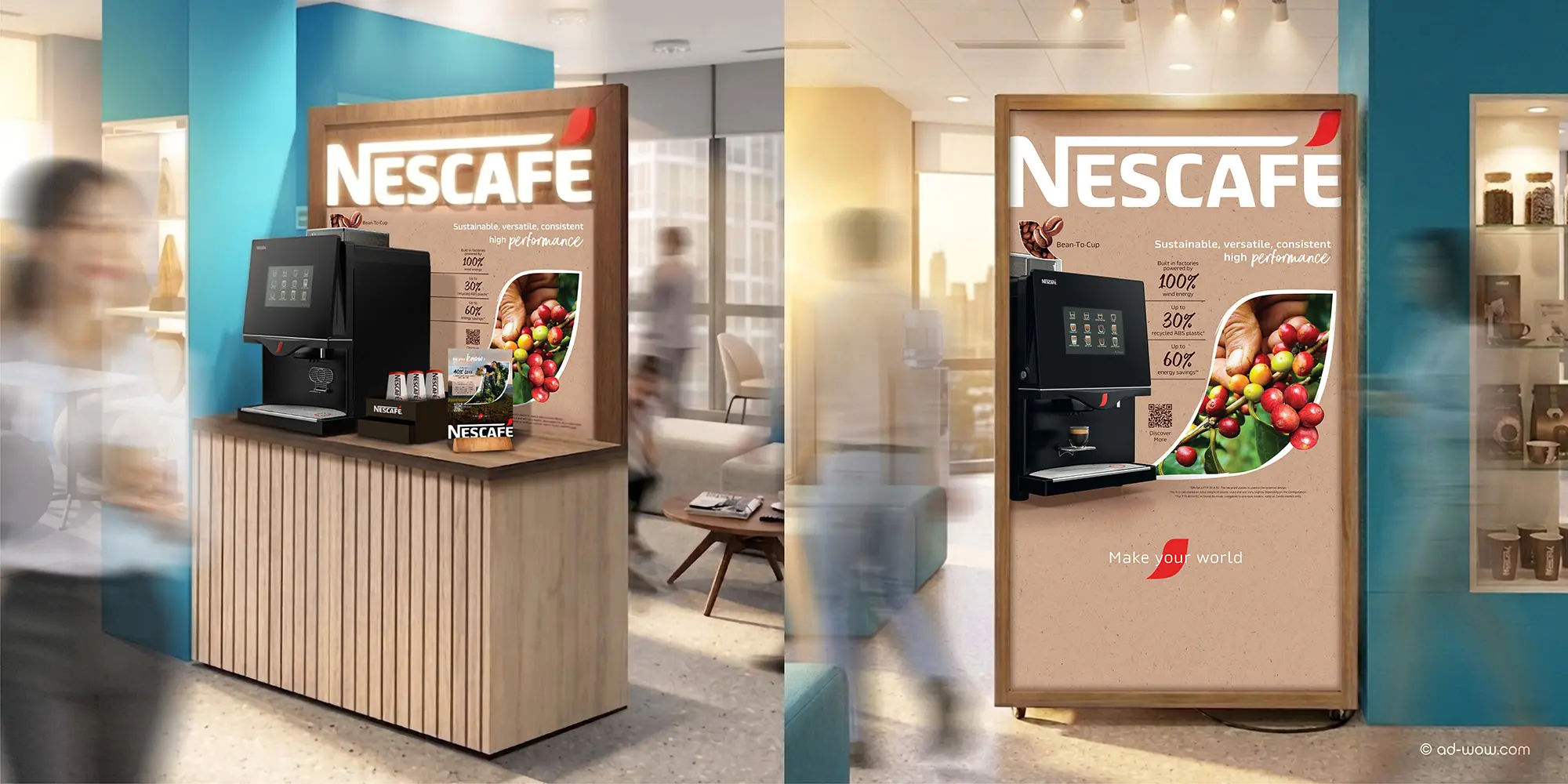
Hi + Ai Empowered Portfolio | Nestlé Professional Booth Design
Hi + Ai Empowered Portfolio |
Nestlé Professional Booth Design

Hi + Ai Empowered Portfolio | Venus & Mars Instore POSM
Hi + Ai Empowered Portfolio |
Venus & Mars Instore POSM
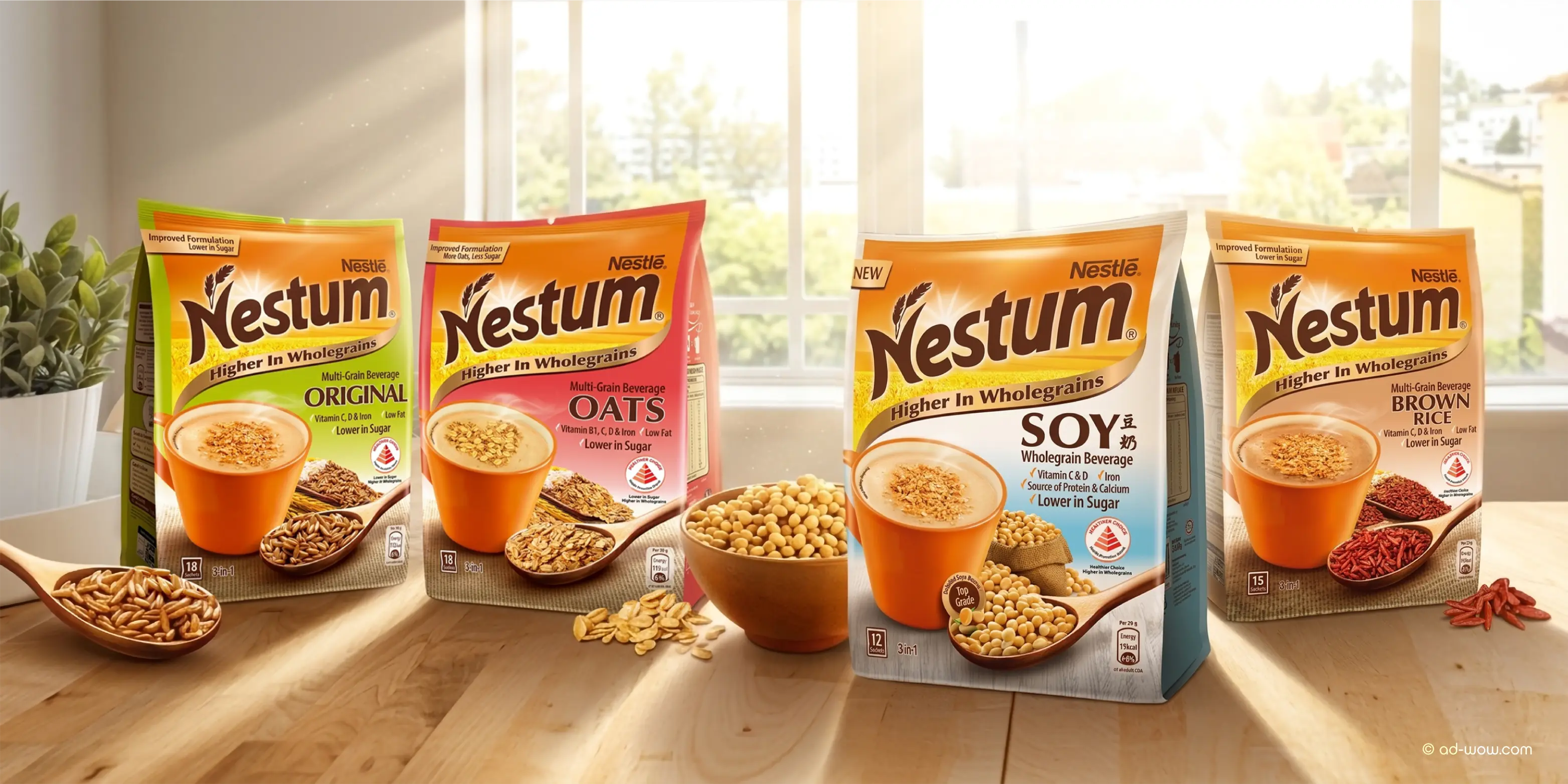
Hi + Ai Empowered Portfolio | Nestum Wholegrain Beverage Packaging
Hi + Ai Empowered Portfolio |
Nestum Wholegrain Beverage Packaging

Hi + Ai Empowered Portfolio | meListen Singapore Intrain Decals
Hi + Ai Empowered Portfolio |
meListen Singapore Intrain Decals


Article 1 >
Hi + AI: The Optimal Brand Solution
Article 2 >
AI Made Content Easier. But Branding Harder.
Article 3 >
Why Brands Become Invisible In The AI Era
Part of the ADWOW Insights series exploring branding, consumer behaviour and strategic differentiation in the AI era. © ADWOW Pte Ltd. All rights reserved.